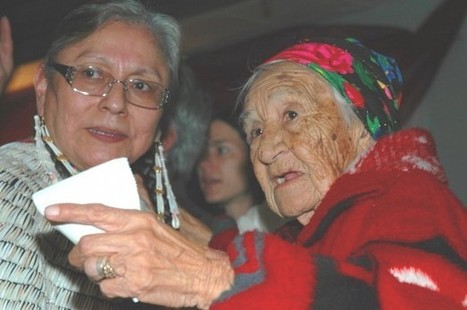
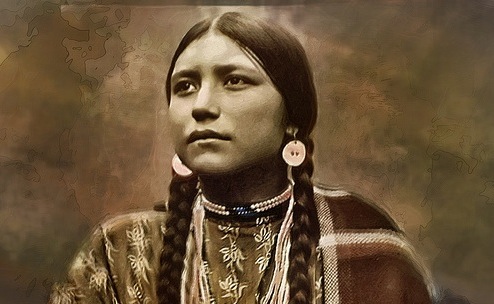
The importance of woman
The bases of Native American society were community / egalitarian where both women and men, regardless of age, enjoyed the same rights with different roles but of equal importance ... This equality is present in most Native American nations, where women had religious, political and economic power - no more than men, but at least equal to men. Native American women had to work outdoors and also keep their families. They were leaders in their communities. Most of the fundamental aspects of this society were shared, including the land. For this reason the native cultures of North America have had so much success in living with nature, thanks to the central role played by women and the deep respect their societies have given them.. LWomen were immensely important and recognized as bearers of life and the breeders of the nation, I would dare to say in very intimate communion with Mother Earth!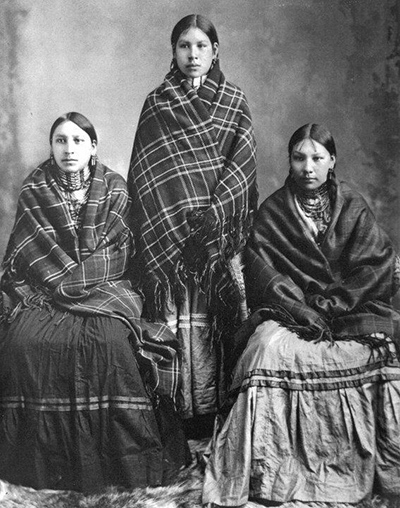
Role of the woman
Although their role differed from that of men, they were not considered inferior. The wisdom of older women in most nations has been consulted with the same respect accorded to men. This central role and the profound respect accorded to them are some of the reasons why the majority of Native American societies were matriarchal and matrilineal. In matrilineal communities, society is not ruled by women in the way that patriarchal societies today are ruled by men - with a strong emphasis on hierarchy, obedience to authority, and a tendency for extremely unequal distributions of wealth and power. Native American matriarchal and matrilineal societies tended to be community-centered, life-centered and strongly interested in the needs of "all" people. The important and indisputable role of the woman was to take care of her children, and the main reason for a man's existence was to support her in this role / task, providing meat from hunting and protection against enemies. In an egalitarian system like this, "all", regardless of gender and age, have their place in the life of the nation. Everyone benefits from a culture based on protection, education and lifelong respect! The concept that women and men are equally important in a society was difficult, if not impossible to understand for people in the old world. Every single member of the society had to fulfill its duty to ensure the survival of the nation. The male role is in no way superior to the female one and neither can most of these societies be divided into a public sphere such as that of males and of the home and family as the responsibility of women. However, female members of a nation generally had to take care of their home, manage their families and children, but above all took part in tribal councils. The males were worried about hunting, war and contact with strangers. Therefore, the "Family" in this context is the Center, the Vital Part, the very Heart of these societies!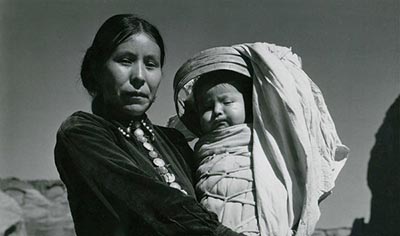
The Women in the Nations
There were nations in which women took part in hunting and men were allowed to take on tasks that, from a Western point of view, would normally be attributed to females. Most Native American societies were egalitarian and matrilineal, which means that descendants and property were passed down to the female side of the family and women had very high social prestige. If a society was matrilineal, it was generally also matrilocal, which means that after the marriage, the husband moved into his wife's house, becoming part of his family and tribal community. The Navajo are an example of a matrilineal / matrilocal nation. In these nations the woman also had the total property of the children, of the sheep, of the cattle, of the jewels, of the blankets she wove and of the income she earned with personal commerce. Another example of a matrilineal / matrilocal nation are the Cherokee. Cherokee women, for example, owned houses, gardens and passed them on to their daughters. Furthermore, the Cherokee Women's Council also decided which men were worthy to perform sacred duties and / or hold political office. Women's authority has been supported and honored in many Native American nations. Women therefore contributed to the well-being of the nation through the dedication with which they raised their children and cared for their families. Their roles have assumed wider dimensions, expanding into politics and spirituality, where many have become Medicine Women and / or Holy Women.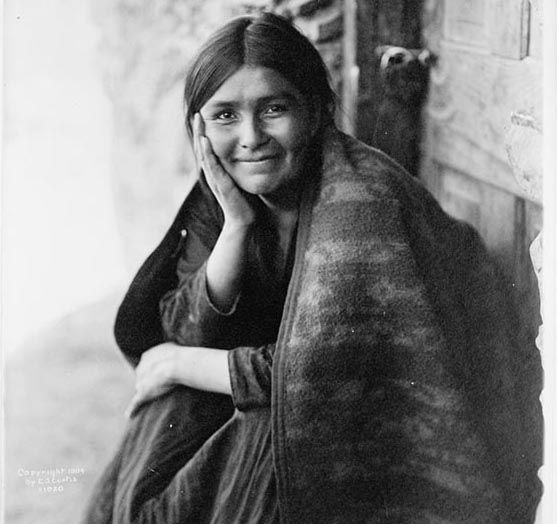
Hospitality
A very important aspect that I absolutely do not want to omit is the hospitality of these peoples. Hospitality is a virtue with few equals in "all" Native American nations. In Indian nations of North America, a hungry person will be "always" welcomed and helped with the utmost respect. Charity is another aspect that I absolutely do not want to omit. In many Native American nations a man who wanted to show his prowess and get honors offered part of his game to widows and elders who could not provide for themselves. Unlike today's competitive individualistic Western values, the strong and talented among indigenous peoples have demonstrated their "superior capabilities" by not putting the weak aside, but taking care of them !!! One of the key requirements of the Leader was that he did not allow anyone in his nation to go hungry. If necessary, he fed them himself. In these nations has "always" guided the example, not the coercion. Among the Iroquois, for example; it was women who chose the leaders (who were always men) according to these "superior capabilities" and could remove them if they proved unworthy. The virtue of sacrifice for others, which can be seen as a "feminine" virtue in Western eyes, survives today among Native American women and men, where it is still accorded great respect to that person of whom it can be said that she or he "works for the people"! Today's Indian women are no different from their predecessors. They face some of the same challenges, only at a different moment in time. Today there are several issues and concerns, but Native American women still have a strong say so when it comes to making important decisions.