Elder
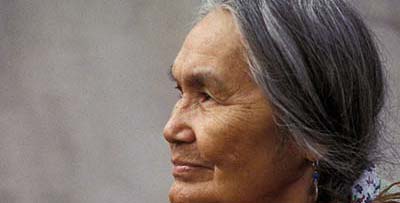
What qualifies a man or woman as an Elder in Native American communities is not to be considered as a mystery. An Elder is simply a man or woman, usually older than the others in the family and community, who, while not elected or appointed for any political or spiritual office within the community, is widely recognized and highly respected for his wisdom and spiritual leadership.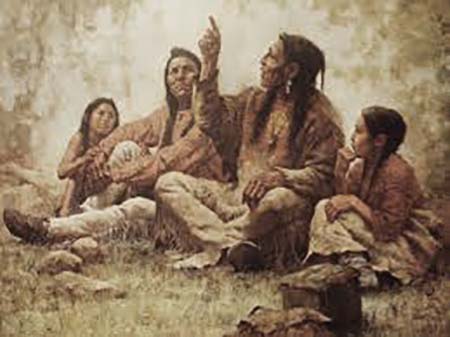
Paid attention
The Elders are known to be "the people who paid attention", acquiring knowledge and wisdom from life. During their childhood, they watched and listened carefully to the ceremonies and traditions, and as young people they paid attention to the way the elders of their communities behaved. Because it is from the way they live that elders teach the younger members of the tribe about the culture of the tribe and traditional ways of life, and it is through oral traditions shared by elders that social values and beliefs are preserved. Essentially, the elders are libraries of Indian knowledge, history and tradition. It is a culture that is always alive, if we want to say that in this case culture corresponds to knowledge, history and tradition. It is the culture of the ever-present past that moves towards the future. In my humble opinion; surely a culture like this makes fewer mistakes. The ways of the past are still vital to the lifestyle of the present. In the past, regardless of the nation, the elders gathered together or in a large tepee or, in a longhouse to make important decisions for the village, for example; on where the tribe had to move, when and where to hunt, plant crops, village security, and more. And very importantly, the children and young people were present and "paid attention" !!!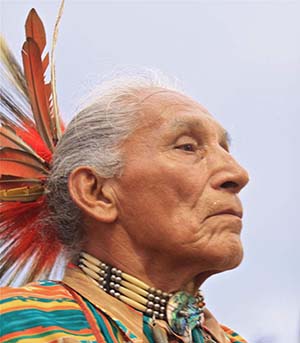
Listen to him !!!
Today, the elders still meet to make decisions through discussion and consensus. And many times, if not always, the elders are called to make recommendations on problems and decisions of the nation even before the governing body meets to deliberate. The elders are always present as part of public meetings, as a valuable source for sessions and board meetings. They could only assist and say nothing, but their presence is always required. Elders are held in high regard for their wisdom. They are appreciated for being the bridge between the past and the present! In Native American nations children and young people are taught that it is very important to listen especially to the elders. They tell the little ones: "When one of the elders speaks, Listen to him !!! ... It doesn't matter if the elder is a direct relative or not, listen to him! " The elders tell the stories of their history, the important decisions of the life of the community. They know what to share with the community, with the young and with the little ones to help the new generations learn the wisdom of the past. A person earns the title of Elder because that person has lived long enough to have wisdom on one or more topics in particular; therefore, anyone who needs help will go to this elder for advice. This does not necessarily mean that the elder must be of advanced age; rather, the important thing is what the elder knows about a particular topic or, about a particular situation.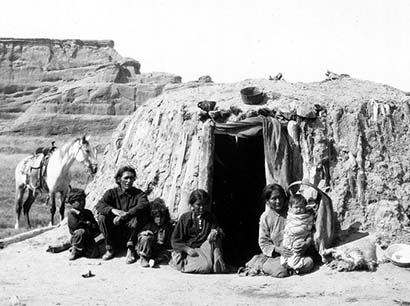
The Family
No one can claim to be an Elder. The term elder is a title of respect that is given to a person by other members of the community, only through examples of life. The vision of the family, for Native Americans, goes far beyond the family unit - father, mother, son, daughter - it extends to grandparents, uncles, aunts and cousins. In this larger family unit, members work and share everything together. Their tradition teaches that it is essential for families to share resources so that everyone can survive. This concept of sharing all resources leads to another important fact and this is; that a person is not respected for what he or she has but rather for what he or she gives! Through sacred ceremonies, Native Americans create special and very deep kinship relationships between uncles and nephews and grandparents, expanding towards paternal and maternal uncles, almost like adopting a new relative and thus creating an extended family that ultimately includes the community itself. Thus becoming very close to one another. And establishing a strong bond between the family and the elders.